The main difference in NDIS SIL vs ILO is how your support at home is set up. Supported Independent Living (SIL) funds paid support workers to help or supervise you 24 hours a day, usually in a shared home. Individualised Living Options (ILO) funds a flexible arrangement you design, often living with a host or housemate, plus family and community support.
This guide compares NDIS SIL vs ILO in plain language. It covers who each option suits, what they pay for, what changed for SIL in 2026 and how to ask for the right home and living support in your NDIS plan.
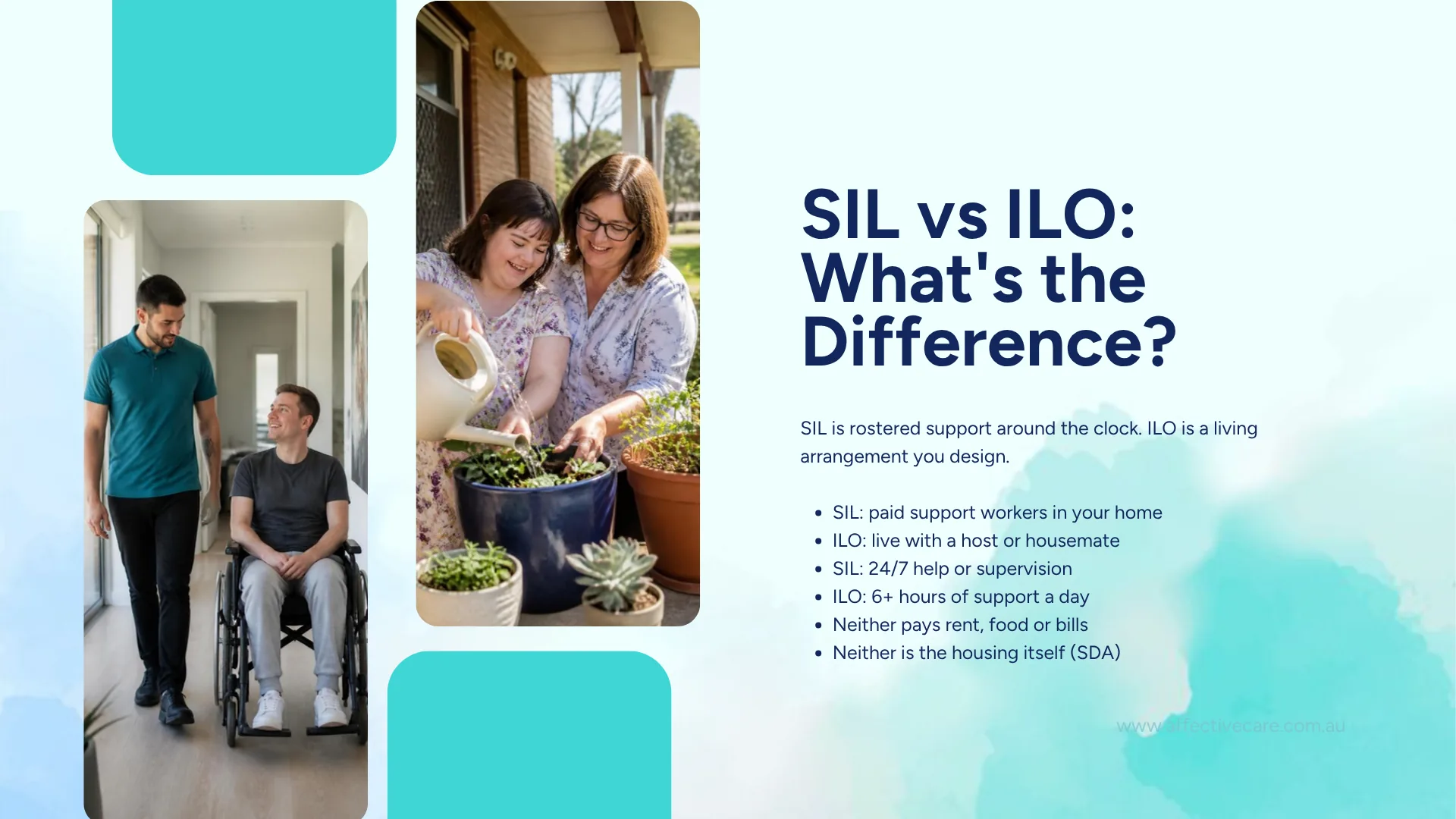
What is the difference between NDIS SIL and ILO?
SIL is rostered, paid support around the clock, while ILO is a personalised arrangement built around the people you live with. Both are NDIS home and living supports, but they suit different needs and lifestyles.
| Feature | SIL | ILO |
|---|---|---|
| Main idea | Paid support workers in your home | A living arrangement you design |
| Support level | 24/7 help or supervision | At least 6 hours of formal or informal support a day |
| Who you live with | Usually other NDIS participants | A host, housemate or on your own with supports |
| Who supports you | Rostered support workers | Host or housemate, plus paid and unpaid supports |
| Set-up | Funded from your plan, provider delivers | 2 stages: design, then set up |
| Provider rules | Must be registered (from 1 Oct 2026) | Work with an ILO provider |
Neither option is the housing itself. If you need a specially built home, that is Specialist Disability Accommodation (SDA), which we explain in our SIL vs SDA guide.
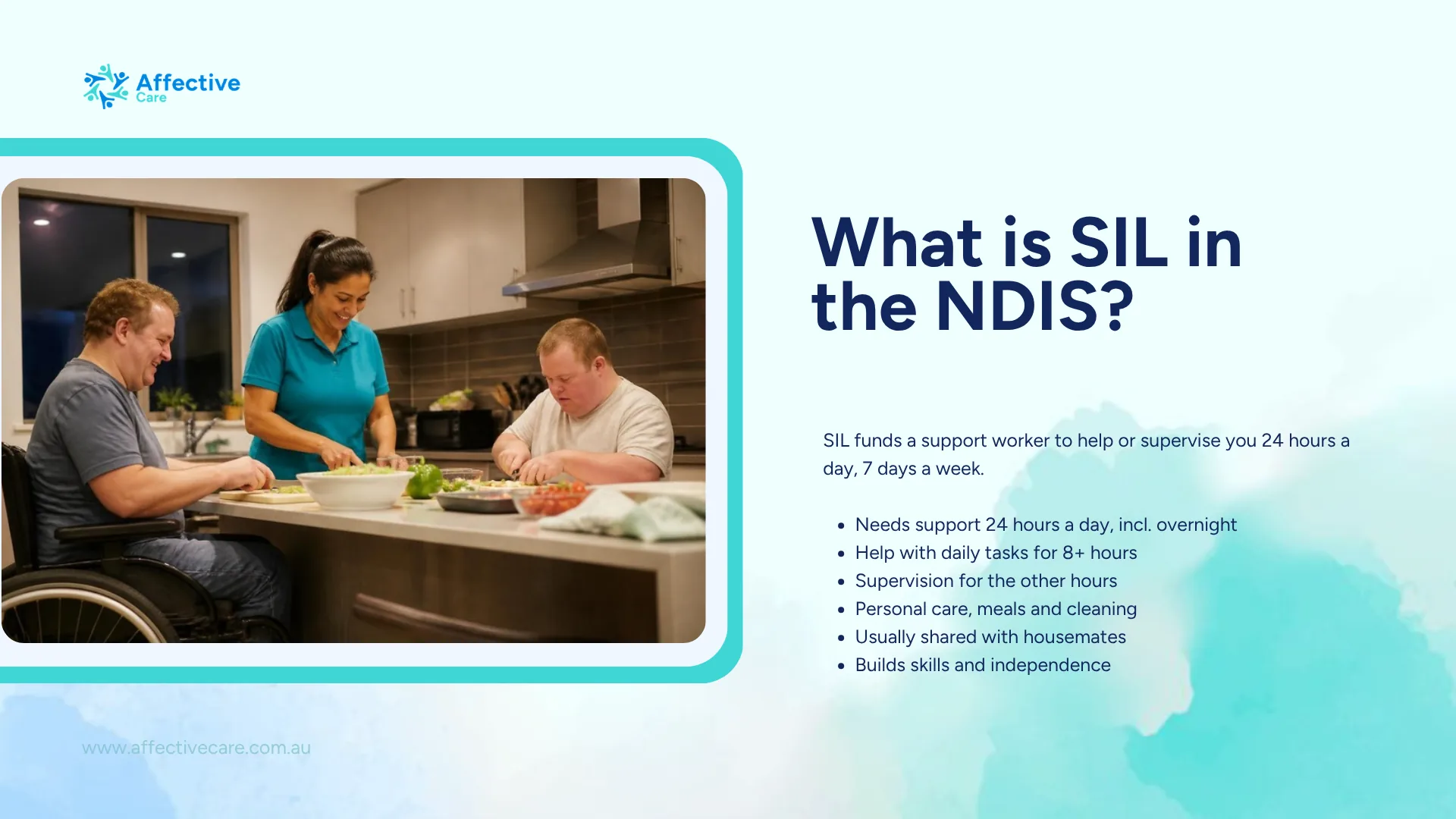
What is Supported Independent Living (SIL)?
According to the NDIS, SIL is funding for a support worker to help or supervise you 24 hours a day, 7 days a week. You may share a support worker with housemates or have your own, depending on how much help you need.
SIL may be suitable if you need a support worker to:
- Stay with you 24 hours a day, including overnight
- Help you with daily activities for at least 8 of those hours
- Give you some level of help or supervision for the other hours
Support workers can help with personal care, showering and dressing, cooking and eating, and household tasks like cleaning. SIL is designed to help you build skills and live as independently as possible. SIL is usually shared, and only funded one-to-one in limited situations. Read more on our Supported Independent Living page and our guide to SIL support ratios.
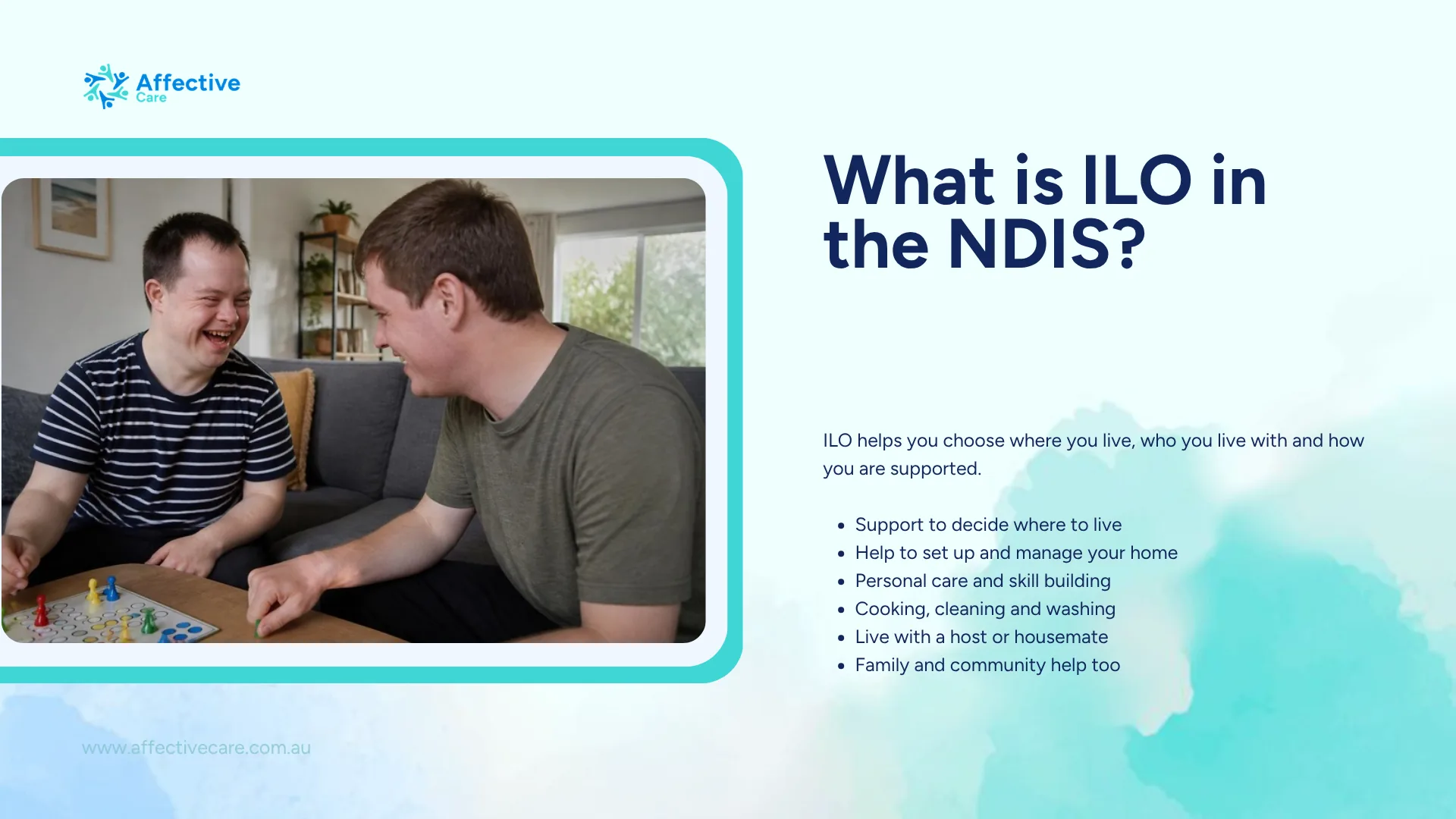
What are Individualised Living Options (ILO)?
ILO is NDIS funding that helps you choose where you live, who you live with and how you want to be supported. It mixes paid support with help from family, friends and your community.
ILO arrangements can include:
- Support to decide where you want to live and what you need to make it happen
- Support to set up and manage your own home
- Personal care
- Support to build your skills
- Help with household tasks like cooking, cleaning and washing
ILO works alongside your other NDIS supports and the mainstream services you already use.
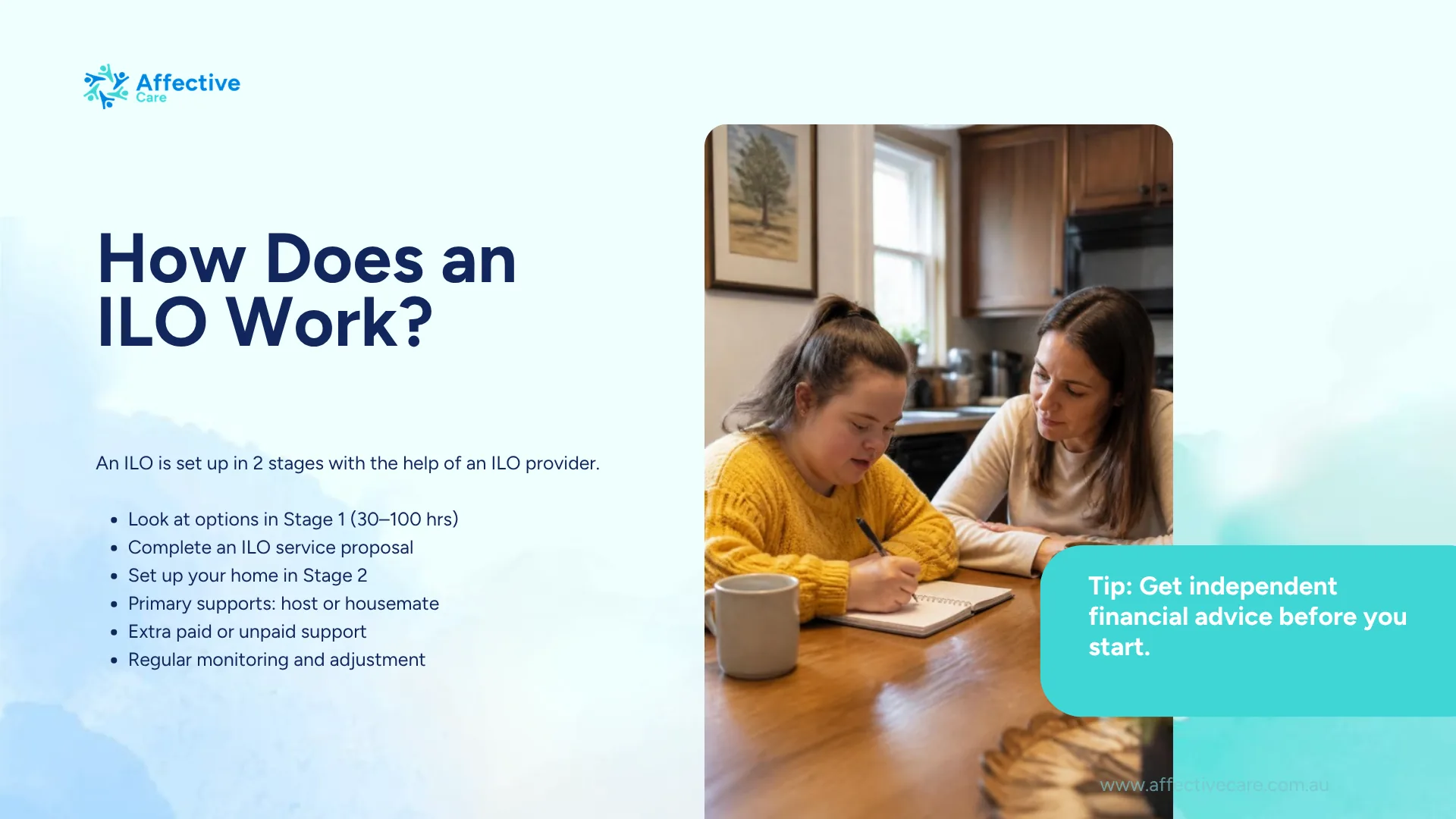
How does an ILO work?
An ILO is set up in 2 stages. First you explore and design your arrangement with an ILO provider, then you put your chosen supports in place.
- Stage 1 – Explore and design. You work with a provider to decide where and how you want to live, which supports suit you and who will provide them. The NDIS says this usually takes 30 to 100 hours. You then complete an ILO service proposal.
- Stage 2 – Set up and live. Once your service proposal is approved, you set up your living arrangement and start using your supports.
Your ILO supports have 3 parts:
- Primary supports: people who live with you, are not related to you and are your main support at home, such as a host or housemate.
- Supplementary supports: extra paid or unpaid help, like a support worker staying over or time with family.
- Monitoring and adjustment: regular checks to make sure the arrangement is still working for you.
The NDIS also suggests both you and ILO providers get independent financial advice first, because ILO payments may be taxable.
Who is SIL best for, and who is ILO best for?
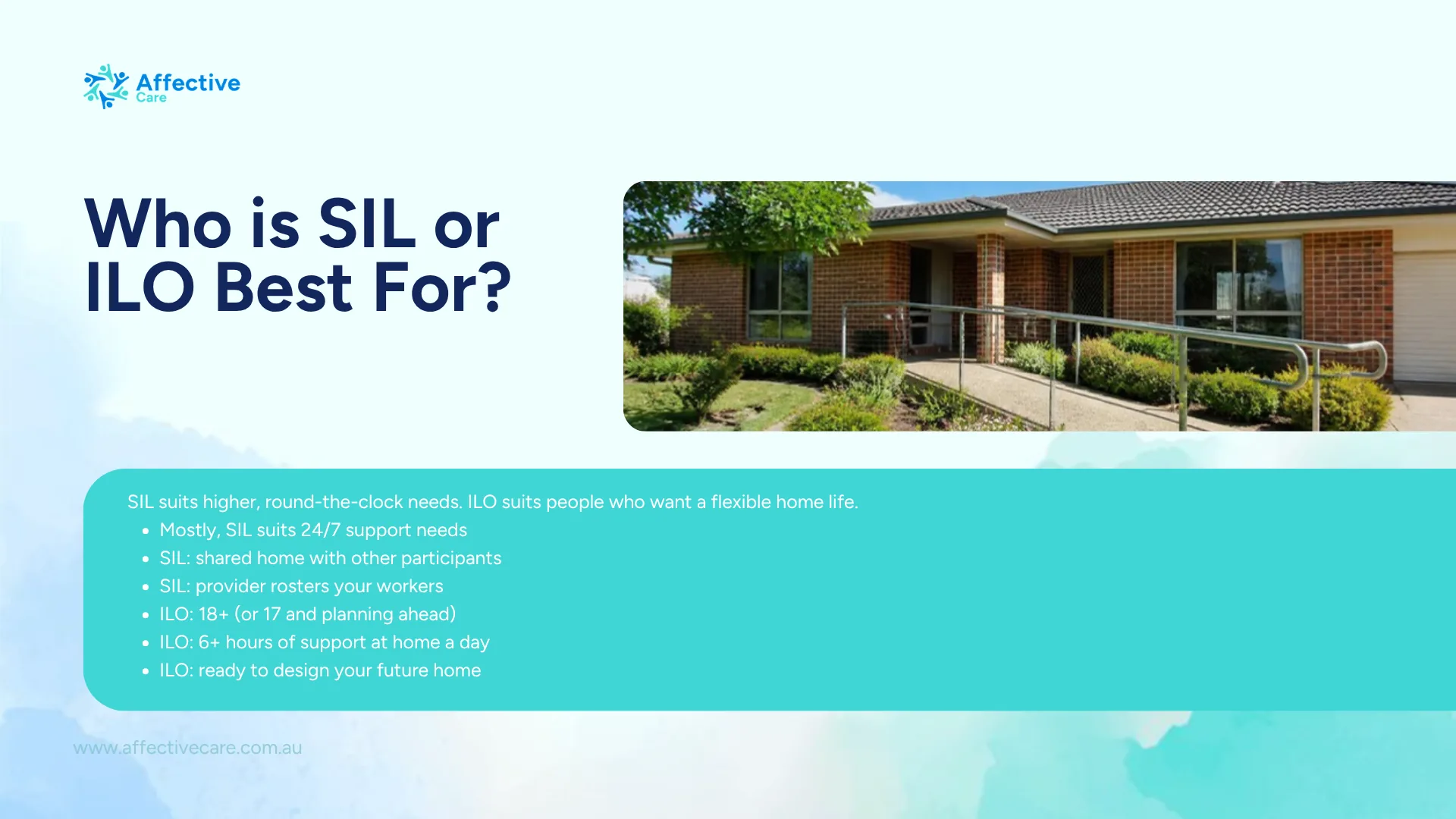
SIL usually suits people with higher support needs who need someone with them around the clock. ILO usually suits people who want a more personal home life and can be supported by a mix of paid and unpaid help.
SIL may suit you if you:
- Need help or supervision 24 hours a day, including overnight
- Want to share a home and support with other NDIS participants
- Prefer a provider to roster and manage your support workers
ILO may suit you if you:
- Are 18 or over, or 17 and planning your future living arrangements
- Need formal or informal support at home for at least 6 hours a day
- Are ready to explore your home and living options
- Are willing to put time and effort into creating your future home
The NDIS also notes that other home and living supports may suit you better than SIL if you live alone, live with people who are not NDIS participants or want to manage your own supports. Check our SIL eligibility criteria guide for more detail.
Talk to us about SIL
Find out whether Supported Independent Living with Affective Care could suit you or someone you support.
What do SIL and ILO not cover?
Neither SIL nor ILO pays for your home or everyday living costs. They fund disability-related support, not rent, bills or groceries.
ILO and SIL funding does not cover:
- Rent or mortgage repayments
- Everyday living costs, such as food and power bills
- Home modifications
- The home itself
ILO also does not fund activities outside your home, such as work, study, sport or going out. Those are funded through other parts of your plan. If you are budgeting for a shared home, see our guide to NDIS SIL rent.
What changed for SIL providers in 2026?
From 1 October 2026, SIL supports can only be delivered by providers that are registered with the NDIS, or that applied to register before that date. The NDIS says your plan and funding will not change because of this.
If your current provider has not registered, the NDIS says it will help you understand your options. You do not need to change anything if you organise or employ your own support workers.
How do you ask for SIL or ILO in your NDIS plan?
Start by talking about your home and living goals with your my NDIS contact, planner or support coordinator. The NDIA (National Disability Insurance Agency) decides what is reasonable and necessary for you.
- Set a home and living goal. Say clearly where and how you want to live.
- Gather evidence. Ask your therapists or doctors for reports about the support you need at home.
- Ask for home and living supports. Request SIL, ILO or both to be considered.
- Get help to choose providers. A support coordinator can help you compare SIL and ILO providers.
- Review how it is going. If your needs change, you can ask for a plan change.
Many people start with SIL and move to ILO later, or the other way around. Our support coordination team can help you plan the move.
Make a referral
Support coordinators, plan managers and families can refer a participant to Affective Care in a few minutes.
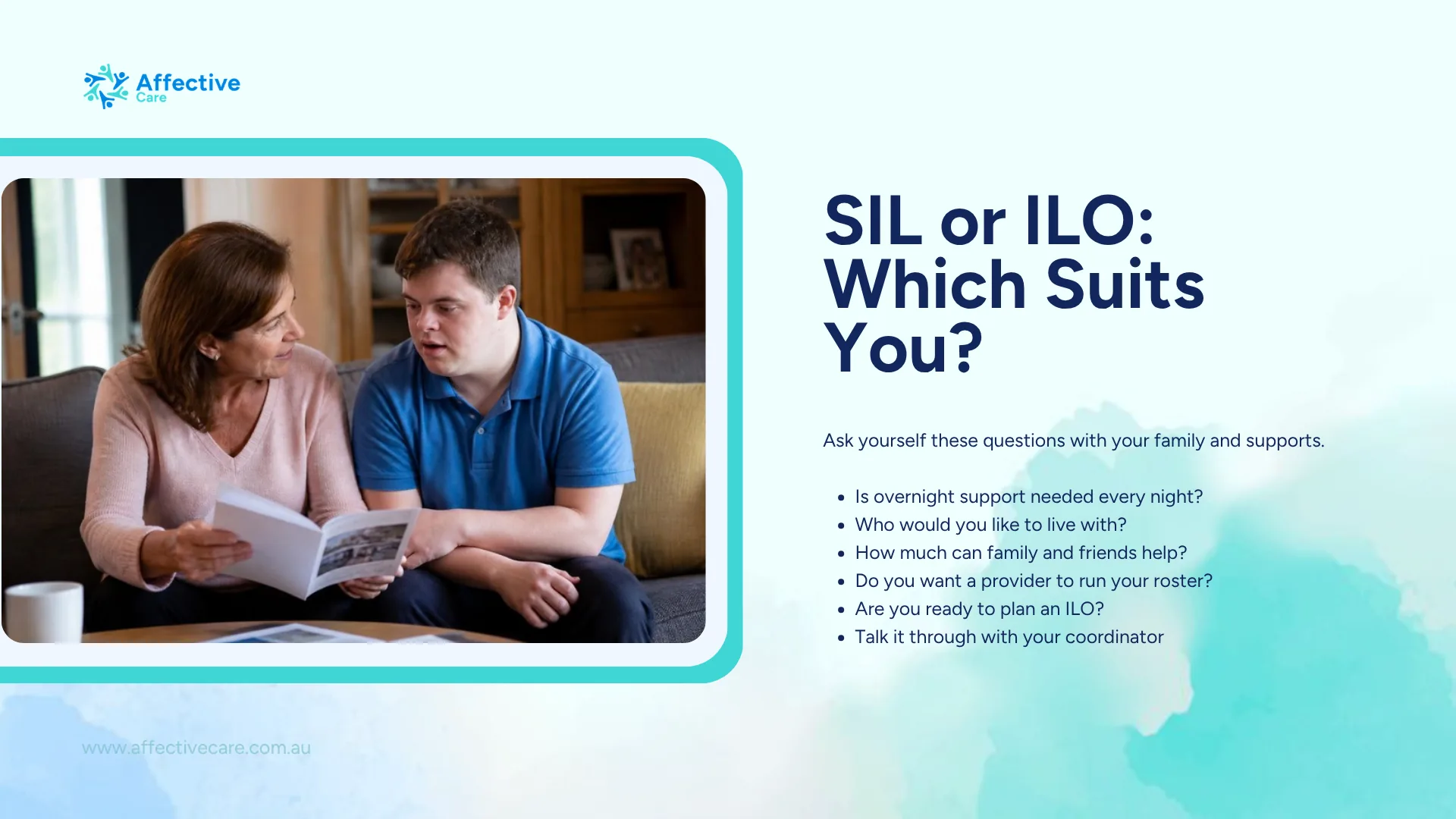
How do you choose between NDIS SIL vs ILO?
Choose the option that matches the support you need and the life you want at home. These questions can help you and your family decide.
- Do you need someone awake or nearby overnight, every night?
- Would you like to live with a host, a friend or in a shared home with other participants?
- How much can family, friends or community help day to day?
- Do you want a provider to manage your roster, or to help design your own setup?
- Are you ready to spend time planning an ILO arrangement?
If you need constant, rostered support, SIL is often the better fit. If you want flexibility and have people around you who can help, ILO may suit you. For questions about either option, contact our team.
This article is general information only. NDIS rules can change, so check the latest information on the NDIS website and speak with your my NDIS contact, planner or support coordinator about your own plan.
Questions about SIL or ILO?
Contact Affective Care to talk about home and living supports in your area.
Frequently asked questions
What is the difference between NDIS SIL and ILO?
SIL funds support workers to help or supervise you 24 hours a day, 7 days a week, usually in a shared home. ILO funds a flexible living arrangement you design, such as living with a host or housemate, combined with paid and unpaid support from family, friends and your community.
Can you have SIL and ILO at the same time?
Usually you would use one main home and living support at a time, because both fund support in your home. Your needs can change, though, and some people move from SIL to ILO or back. Talk to your planner or support coordinator about what suits your situation.
Who is eligible for ILO?
The NDIS says ILO might be right for you if you are 18 or over (or 17 and planning ahead), need formal or informal support at home for at least 6 hours a day, and are ready to explore your home and living options and put time into creating your future home.
Does SIL or ILO pay for rent?
No. Neither SIL nor ILO pays for rent, mortgage repayments or everyday living costs like food and power bills. They fund disability-related support only. You pay your own rent and living costs, for example from the Disability Support Pension or other income.
Is ILO cheaper than SIL?
It depends on your needs. ILO can sometimes cost less because it uses hosts, housemates and unpaid support alongside paid workers. SIL funds rostered support around the clock. The NDIA decides what is reasonable and necessary.
Do SIL providers need to be registered in 2026?
Yes. From 1 October 2026, SIL supports can only be delivered by providers that are registered or applied to register before that date. Your plan and funding do not change. If you employ your own support workers, you do not need to change anything.